

- 10th Kup Revision Guide
- 9th Kup Revision Guide
- 8th Kup Revision Guide
- 7th Kup Revision Guide
- 6th Kup Revision Guide
- 5th Kup Revision Guide
- 4th Kup Revision Guide
- 3rd Kup Revision Guide
- 2nd Kup Revision Guide
- 1st Kup Revision Guide
- 1st Dan Revision Guide
- 2nd Dan Revision Guide
- 3rd Dan Revision Guide
- 4th Dan Revision Guide
- 5th Dan Revision Guide
6th Kup (Green Belt with Blue Tag) Grading Requirements
This guide will help you prepare for your upcoming grading. Remember that the actual format may vary at the examiner’s discretion.
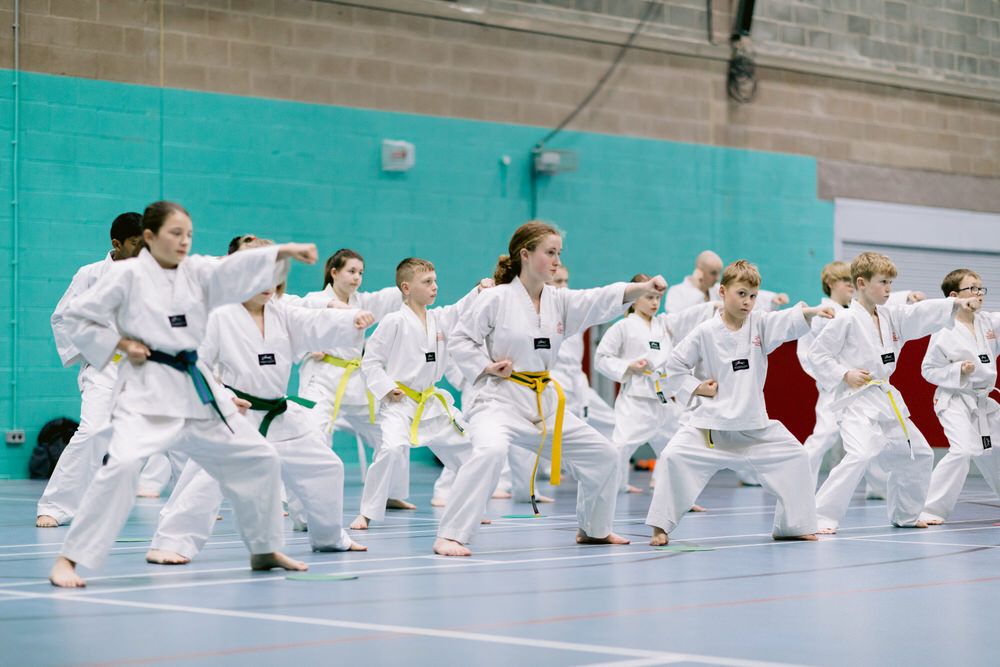
“Mastery is not perfection but a journey, and the true master must be willing to try and fail and try again.”
What You Need to Know
Practical Elements
- Fundamental Techniques:
- Combinations in line from patterns
- Pattern set by the grading examiner
- Pattern – Won Hyo (28 movements)
- Sparring:
- Three Step Sparring – numbers 8, 9 & 10
- Semi-free Sparring (basic level)
Three Step Sparring (Sambo Matsoki)
Attack Format: Always three middle section front punches in walking stance, starting with right leg back in low block.
Defenses: Start from Parallel Ready Stance
- Defense Eight:
- Step back with right leg into L stance
- Execute middle knifehand block to the inside (two times)
- Counter attack: Move right foot to left foot, push off left foot sliding back at 45-degree angle into right L stance with forearm guarding block. Execute right side kick landing in left L stance, followed by right front backfist strike or knifehand strike to the neck
- Defense Nine:
- Step back with right leg into L stance
- Execute middle palm pushing block to the outside (three times)
- Counter attack: Slide back at 45-degree angle to outside of opponent into right L stance with knifehand guarding block. Execute right middle section turning kick, placing kicking foot behind opponent’s front foot landing in vertical stance while executing knifehand strike to the neck
- Defense Ten:
- Step back with right leg into L stance
- Execute middle knifehand block to the inside (two times)
- Counter attack: Move right foot to left foot pushing off left foot, slide back at 45-degree angle into right L stance with knifehand guarding block. Execute reverse side kick, land in right walking stance while executing left hand reverse knifehand strike to the philtrum
Three Step Semi-Free Sparring (Ban Jayoo Matsoki)
Starting Positions:
- Attacking students: L stance with guarding block
- Defending students: Parallel stance
Basic Level Format:
- Attack: Kicking with back leg first – front kick, side kick, turning kick
- Defense: Any block suitable for each individual kick
- Counter: Reverse punch
Note: The attacker starts with either leg back every time.
Theoretical Knowledge
Purpose of Three Step Semi-Free Sparring
This form of sparring is designed as a progression from basic three step sparring. It involves three consecutive attacks and three blocks or evasions, plus a counter attack. It develops timing, distance, and adaptation to different types of kicks.
Essential Korean Terminology
Stances:
- Bending Ready Stance ‘A’: Goburyo Sogi
- Closed Ready Stance ‘A’: Moa Junbi Sogi ‘A’
- Vertical Stance: Soojik Sogi
Hand Techniques:
- Side Punch: Yop Jirugi
- Vertical punch: Sewo jirugi
- Circular Block: Dollymio Makgi
- Hooking block: Golcho makgi
- Waist Block: Hori Makgi
Foot Parts:
- Back: Dwit
- Back Heel: Dwit Chook
- Back Sole: Dwit Kumchi
Kicks:
- Knee Kick: Moorup Chagi
- Reverse turning kick: Bandae dollyo chagi
Body Categories:
- Foot parts: Hanbansin
- Hand parts: Sangbansin
Sparring Terms:
- 2 Step Sparring: Ibo Matsoki
- Sparring: Matsoki

Won-Hyo Pattern
Number of Movements: 28
Meaning: Won-Hyo was the noted monk who introduced Buddhism to the Silla Dynasty in the year 686 AD.
Starting Position: Closed ready stance A
Movement Sequence
- Move left foot to B, forming right L-stance while executing twin forearm block
- Execute high inward strike to B with right knife-hand while bringing left side fist in front of right shoulder, maintaining right L-stance
- Execute middle punch to B with left fist while forming left fixed stance toward B, slipping left foot to B
- Bring left foot to right foot, then move right foot to A, forming left L-stance while executing twin forearm block
- Execute high inward strike to A with left knife-hand while bringing right side fist in front of left shoulder, maintaining left L-stance
- Execute middle punch to A with right fist while forming right fixed stance toward A, slipping right foot to A
- Bring right foot to left foot, turn face toward D while forming right bending ready stance A
- Execute middle side piercing kick to D with left foot
- Lower left foot to D, forming right L-stance while executing middle knife-hand guarding block
- Move right foot to D, forming left L-stance while executing knife-hand guarding block
- Move left foot to D, forming right L-stance while executing middle knife-hand guarding block
- Move right foot to D, forming right walking stance while executing middle thrust with right straight fingertip
- Move left foot to E turning counter-clockwise, forming right L-stance while executing twin forearm block
- Execute high inward strike to E with right knife-hand while bringing left side fist in front of right shoulder, maintaining right L-stance
- Execute middle punch to E with left fist while forming left fixed stance toward E, slipping left foot to E
- Bring left foot to right foot, then move right foot to F, forming left L-stance while executing twin forearm block
- Execute high inward strike to F with left knife-hand while bringing right side fist in front of left shoulder, maintaining left L-stance
- Execute middle punch to F with right fist while forming right fixed stance toward F, slipping right foot to F
- Bring right foot to left foot, then move left foot to C forming left walking stance while executing circular block to CF with right inner forearm
- Execute low front snap kick to C with right foot, keeping hands in same position as movement 19
- Lower right foot to C, forming right walking stance while executing middle punch to C with left fist
- Execute circular block to CE with left inner forearm while maintaining right walking stance toward C
- Execute low front snap kick to C with left foot, keeping hands in same position as movement 22
- Lower left foot to C, forming left walking stance while executing middle punch to C with right fist
- Turn face toward C, forming left bending ready stance A
- Execute middle side piercing kick to C with right foot
- Lower right foot on line CD, then move left foot to B turning counter-clockwise to form right L-stance toward B while executing middle forearm guarding block
- Bring left foot to right foot, then move right foot to A forming left L-stance toward A while executing middle forearm guarding block
End: Bring the right foot back to ready posture
Practice Tips
- For Won-Hyo pattern, pay special attention to the fixed stance movements which require slipping the foot
- Practice the closed ready stance A starting position which is new in this pattern
- When performing circular blocks, focus on the correct path of the blocking arm
- In three step sparring, work on smooth transitions between blocks and counter attacks
- For semi-free sparring, practice recognizing and responding to different kicks quickly
- Practice vertical stance with proper weight distribution (50/50)
- When executing reverse side kick in defense 10, focus on proper chamber and extension
- Work with a partner to develop proper timing and distance in semi-free sparring
Upcoming Grading Information
2025 Grading Dates at Hereford Leisure Centre:
- 9th March
- 15th June
- 7th September
- 7th December
Please arrive 30 minutes before your scheduled grading time. Remember to bring your full dobok (uniform), belt, and TAGB license book.
Club Training Times
Prepare for your grading by attending our regular classes:
Leominster Leisure Centre
Coningsby Rd, Leominster HR6 8LL
- Thursday: 6:00pm – 7:00pm
- Saturday: 10:00am – 11:30am
Additional Resources
- Download Printable PDF Version
- Watch Won-Hyo Demonstration Video
- Three Step Sparring Video Guide
- Semi-Free Sparring Demonstration
- Contact Your Instructor
Last updated: March 2025
Good luck with your 6th Kup grading!
What are the different Belts in Tae Kwon Do?
White Belt: The starting point in Tae Kwon Do training What are the different Belts in Tae Kwon Do? Tae Kwon Do, a Korean martial art known for its dynamic kicks and fast-paced movements, offers individuals of all ages and fitness levels the opportunity to learn self-defence skills, improve their physical fitness, and cultivate discipline…Is Tae Kwon Do or Karate better?
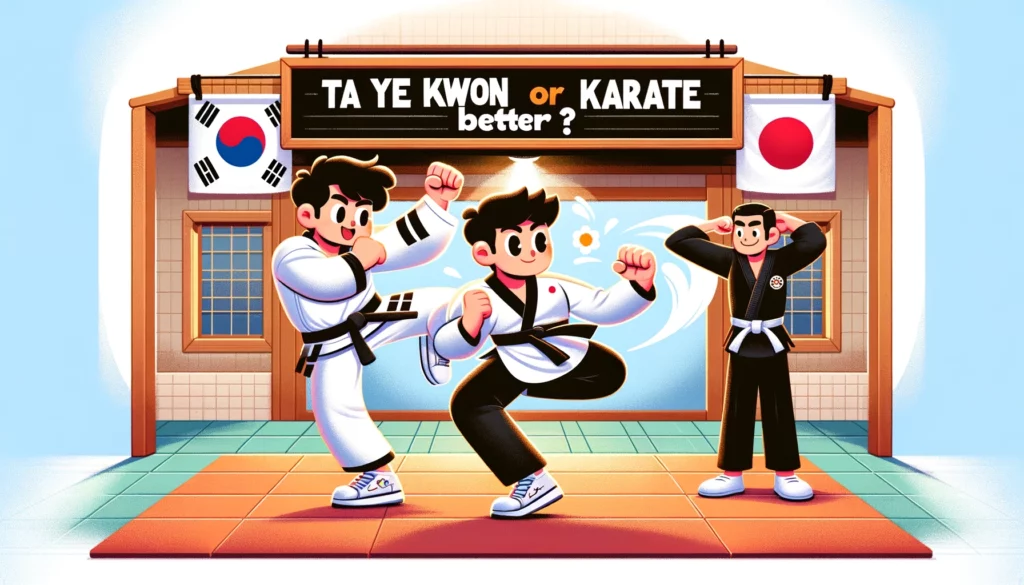
Is Tae Kwon Do or Karate better? The answer depends on your personal goals and preferences, as martial arts offer unique benefits and philosophies. Origins and History One of the most fascinating aspects of martial arts is their diverse origins and rich historical backgrounds. Each martial art has unique beginnings, often rooted in ancient cultures…


Contact Us
Your journey in Tae Kwon Do awaits! Sign up for a trial period at your local Tae Kwon Do School.