
White Belt: The starting point in Tae Kwon Do training
What are the different Belts in Tae Kwon Do? Tae Kwon Do, a Korean martial art known for its dynamic kicks and fast-paced movements, offers individuals of all ages and fitness levels the opportunity to learn self-defence skills, improve their physical fitness, and cultivate discipline and focus. The journey in Tae Kwon Do begins with the white belt, which symbolizes a fresh start, humility, and the willingness to learn. At this starting point, students are introduced to the fundamental techniques and principles that form the foundation of Tae Kwon Do.
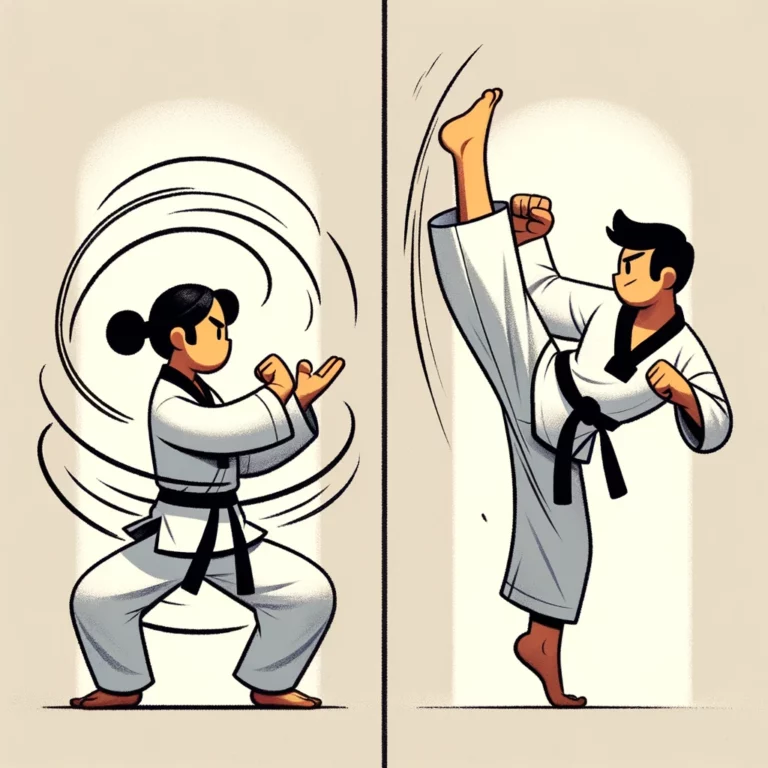
During the white belt training, beginners are taught basic stances, kicks, and punches, enabling them to develop a solid understanding of body mechanics and correct execution of movements. They learn how to stand with proper posture, align their hips, and pivot on the balls of their feet to generate power in their strikes. Although the techniques practised at this stage may seem simple, they lay the groundwork for more advanced skills. Additionally, white belt students are introduced to the etiquette and traditions of Tae Kwon Do, emphasizing respect, discipline, and the importance of bowing to instructors and fellow students.

Yellow Belt: Progressing from the beginner level
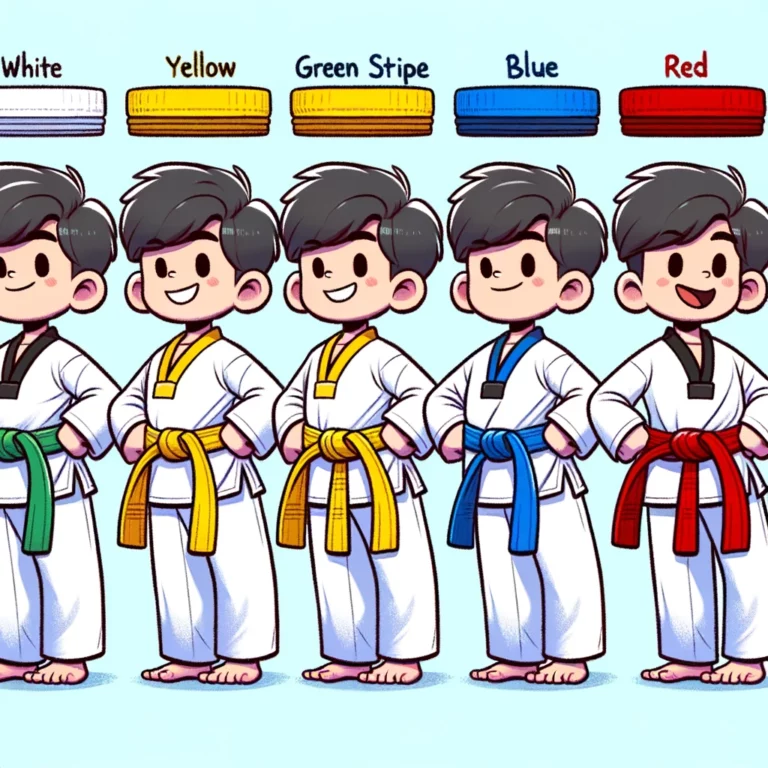
Once practitioners have obtained the coveted White Belt in Tae Kwon Do, they are ready to progress to the next level: the Yellow Belt. This belt symbolizes the transition from a beginner to a more intermediate level of training. With the attainment of the Yellow Belt, students can begin to build upon the fundamental techniques and knowledge they have acquired thus far.
At the Yellow Belt level, practitioners will continue training in basic strikes, kicks, and blocks, honing their technique and precision. They will also be introduced to new techniques, such as combinations and self-defence moves, to enhance their understanding and further application of Tae Kwon Do. Additionally, students will increase their physical endurance and flexibility as they push themselves to perform more challenging drills and exercises. Each class encourages them to make their limits and continuously strive to improve their skills and abilities.
• Practitioners at the Yellow Belt level will continue to practice and perfect basic strikes, kicks, and blocks.
• They will be introduced to new techniques, such as combinations and self-defence moves.
• Physical endurance and flexibility are emphasized through more challenging drills and exercises.
• Students are encouraged to push their limits and continuously strive to improve their skills.
Green Belt: Advancing further in skills and knowledge
As students progress from the beginner level, they reach the Green Belt stage in Tae Kwon Do training. At this level, they continue to advance their skills and knowledge, building upon the foundation set in the earlier belts. Green Belt is a significant milestone, indicating the students’ dedication and understanding of the fundamental techniques of Tae Kwon Do.
In the Green Belt stage, students refine their techniques and expand their repertoire. They improve their accuracy, speed, and power in executing kicks, strikes, and blocks. Additionally, they learn and practice more intricate and advanced forms, which require increased coordination, balance, and concentration. With each training session, students gain a deeper understanding of the principles and philosophy behind Tae Kwon Do, incorporating discipline and respect into their practice. They also begin to develop their sparring skills, applying their techniques in controlled combat situations. The Green Belt stage is a stepping stone towards higher expertise and progress in Tae Kwon Do.
Blue Belt: Demonstrating increased proficiency in techniques
Students are expected to demonstrate increased proficiency in their techniques at the Blue Belt level in Tae Kwon Do. This means that they have honed their skills and can execute their movements with more precision and control. They have a solid foundation in the basic techniques of Tae Kwon Do, such as punches, kicks, and blocks, and are now ready to progress to more complex combinations and advanced forms.
One of the critical areas of focus for Blue Belt students is improving their sparring abilities. Sparring is a crucial aspect of Tae Kwon Do training, allowing students to apply their techniques in a realistic and dynamic setting. Students are expected to develop their timing, footwork, and accuracy to engage in sparring matches effectively at this level. They learn to read their opponent’s movements and react swiftly, using offensive and defensive techniques to gain an advantage. Through continuous practice and experience, Blue Belt students further enhance their technique and gain valuable insights into the art of Tae Kwon Do.
Red Belt: Achieving a higher level of expertise and commitment
The Red Belt in Tae Kwon Do represents an essential milestone in a practitioner’s journey. Students have developed a solid knowledge of techniques and a deeper understanding of the art at this level. Their commitment to training and continuous improvement is evident, as they exhibit higher dedication and discipline. Red Belt holders have honed their skills and are ready to push themselves further physically and mentally.
Achieving the red belt requires a significant investment of time and effort. Students must demonstrate technical proficiency and a strong sense of perseverance and resilience. The path to the red belt involves rigorous training and a willingness to step outside one’s comfort zone. With each class and each training session, red belt candidates push their limits, constantly seeking improvement in their techniques and expanding their knowledge of Tae Kwon Do. Their commitment to the art is unwavering as they strive for excellence and personal growth. The red belt signifies their commitment to their martial arts journey and their dedication to becoming the best version of themselves both on and off the training mat.
What is the starting point in Tae Kwon Do training?
The starting point in Tae Kwon Do training is the White Belt level.
How does one progress from the beginner level in Tae Kwon Do?
One must achieve the Yellow Belt level to progress from the beginner level in Tae Kwon Do.
What does achieving the Green Belt level in Tae Kwon Do signify?
Achieving the Green Belt level in Tae Kwon Do signifies advancing skills and knowledge.
At what level does one demonstrate increased proficiency in techniques in Tae Kwon Do?
One demonstrates increased proficiency in techniques at the Blue Belt level in Tae Kwon Do.
What is the significance of achieving the Red Belt level in Tae Kwon Do?
Achieving the Red Belt level in Tae Kwon Do signifies achieving a higher level of expertise and commitment.